
TikTok has become one of the most popular platforms for sharing short videos, discovering trends, building communities, and promoting businesses. Whether you are a beginner creator, an tiktok engagement rate calculator influencer, or a brand marketer, understanding how people interact with your content is essential for long-term growth. While views can show how many people watched a video, engagement reveals how actively your audience responds to it.
A TikTok Engagement Rate Calculator helps creators measure interactions such as likes, comments, and shares in relation to views or followers. By understanding these numbers, you can evaluate your content performance, identify successful videos, and develop a smarter TikTok marketing strategy. Instead of relying only on follower counts, you can use engagement data to understand how effectively your videos connect with viewers.
What Is a TikTok Engagement Rate Calculator?
A TikTok Engagement Rate Calculator is a tool that estimates the percentage of people interacting with your content. It uses engagement metrics and a selected measurement method to produce a percentage that makes performance easier to understand.
For example, a video with thousands of views may receive relatively few likes, comments, or shares. Another video with fewer views might generate significantly more interaction. Measuring engagement helps you recognize this difference.
Most calculators use metrics such as:
- Likes: Show how many viewers appreciated your content.
- Comments: Indicate audience interest and conversation.
- Shares: Reveal whether viewers find your content valuable enough to distribute.
- Views: Help measure how frequently your video has been watched.
- Followers: Provide a way to compare interactions with your audience size.
The exact formula depends on whether you want to measure engagement by views, followers, or another performance metric.
How to Calculate Your TikTok Engagement Rate
Calculating engagement does not require advanced marketing knowledge. You simply need the relevant numbers from your TikTok account and a consistent formula.
1. Engagement Rate by Views
This method measures interactions relative to video views. It is particularly useful when evaluating the performance of individual videos.
The formula is:
Engagement Rate by Views = (Likes + Comments + Shares) ÷ Total Views × 100
Suppose one of your videos receives the following results:
- Likes: 800
- Comments: 100
- Shares: 100
- Views: 20,000
Your total interactions equal 1,000. Dividing 1,000 by 20,000 and multiplying by 100 produces an engagement rate of 5%.
This means the video generated interactions equal to 5% of its total views using this formula.
2. Engagement Rate by Followers
Another approach compares interactions with your follower count. It can help you assess how your content performs relative to your existing audience.
The formula is:
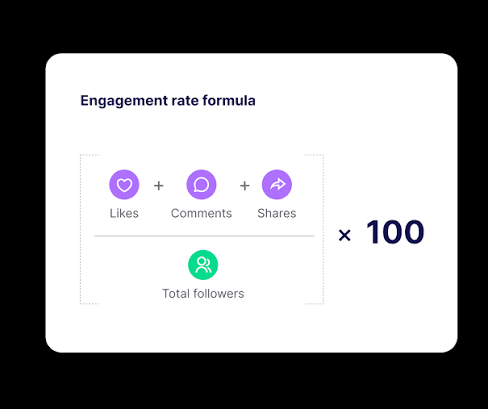
Engagement Rate by Followers = (Likes + Comments + Shares) ÷ Followers × 100
Imagine that your account has 10,000 followers and a video receives 1,000 total interactions. Your engagement rate by followers would be 10%.
However, this figure does not mean that 10% of your followers interacted with the video. Some interactions may come from people who do not follow you, and many followers may never have seen the video.
3. Average Engagement Rate Across Multiple Videos
If you want to understand your overall content performance, calculate engagement for several videos rather than judging your account by a single upload.
You can calculate each video’s engagement rate and then find the average. Alternatively, divide the combined interactions across your selected videos by their combined views to calculate a view-weighted engagement rate.
These methods answer slightly different questions, so choose the one that best matches your goal and use it consistently.
Why Is TikTok Engagement Rate Important?
Engagement rate provides information that view counts alone cannot offer. A video may attract substantial attention without encouraging meaningful interaction. Measuring engagement helps you look beyond popularity and understand how viewers respond.
Understand Audience Interest
Likes, comments, and shares can help reveal which topics attract attention. If educational tutorials consistently generate discussion, for example, you may want to explore more content around the same subject.
Compare different video formats, hooks, lengths, and topics to discover patterns in audience behavior.
Improve Your Content Strategy
Performance data can guide future creative decisions. You might discover that short tutorials receive more shares, behind-the-scenes clips generate more comments, or storytelling videos encourage viewers to watch longer.
These insights can help you experiment with new ideas while keeping your content relevant to your audience.
Evaluate Influencer Partnerships
Brands often examine engagement when choosing creators for promotional campaigns. Follower counts can provide an initial indication of audience size, but engagement metrics offer additional context about how people interact with a creator’s videos.
An engagement calculator can support an initial assessment, although brands should also review audience relevance, content quality, authenticity, and campaign results.
Track Progress Over Time
Regular measurement allows you to compare performance across weeks or months. You can identify improvements, recognize declining engagement, and investigate whether changes in your publishing strategy are producing useful results.
Remember that fluctuations are normal. One video rarely provides enough evidence to determine whether an entire account is growing successfully.
How to Use a TikTok Engagement Rate Calculator
Using an online calculator is generally straightforward. Follow these steps to obtain a useful estimate.
Step 1: Select your measurement method. Decide whether you want to calculate engagement by views or followers.
Step 2: Collect your data. Record the number of likes, comments, shares, views, or followers required by your chosen formula.
Step 3: Enter the figures. Add the values to the appropriate calculator fields, checking that you have not mixed statistics from different videos or reporting periods.
Step 4: Calculate the percentage. Review the result and note which formula the tool uses.
Step 5: Compare similar content. Evaluate videos with comparable goals, formats, and audiences to identify meaningful differences.
Step 6: Make informed adjustments. Use the findings to plan future content experiments rather than assuming that a single percentage explains every result.
For the most accurate comparisons, use consistent reporting periods and avoid comparing a newly published video with an older video that has had much more time to collect interactions.
What Is a Good TikTok Engagement Rate?
There is no universal engagement rate that guarantees success on TikTok. Results vary according to niche, audience size, content type, video reach, and calculation method.
A small creator may receive frequent comments from a dedicated community, while a larger account may reach a broad audience with a lower interaction rate. Both situations can have value depending on the creator’s objectives.
Instead of relying entirely on generic industry benchmarks, start by establishing your own baseline.
- Compare your latest videos with your previous uploads.
- Identify your strongest and weakest performers.
- Examine whether your results differ by content category.
- Track engagement alongside views, watch time, and audience growth.
- Review several videos before making major strategic changes.
If you use external benchmarks, check that they use the same engagement formula and comparable account categories. Otherwise, the comparison may be misleading.
Practical Ways to Improve TikTok Engagement
Once you understand your current performance, you can test strategies designed to encourage meaningful interaction.
Create Strong Opening Moments
The opening seconds of a video should quickly communicate its topic or value. A clear question, an interesting demonstration, or a concise explanation can encourage viewers to continue watching.
Avoid misleading hooks that promise something the video never delivers.
Encourage Genuine Conversations
Ask relevant questions that invite viewers to share experiences, opinions, or suggestions. Responding thoughtfully to comments can help build a more active community.
The goal should be meaningful discussion rather than collecting comments through repetitive or irrelevant prompts.
Follow Trends Selectively
Trending sounds, formats, and topics can offer creative opportunities, but not every trend suits every account. Choose trends that fit your audience, niche, and message instead of copying content without a clear purpose.
Publish Consistently
A realistic posting schedule helps you develop a repeatable content workflow. Consistency also gives you more opportunities to test ideas and understand what resonates with your viewers.
Prioritize useful, entertaining, or original content rather than publishing simply to meet an arbitrary daily target.
Experiment With Different Formats
Try tutorials, storytelling, product demonstrations, behind-the-scenes videos, and educational clips. Compare their engagement rates and other performance indicators to discover which formats best support your objectives.
Common Mistakes to Avoid When Measuring Engagement
Even a reliable calculator can produce misleading conclusions if the input data or interpretation is incorrect.
One common mistake is comparing engagement rates calculated with different formulas. View-based and follower-based rates measure different relationships, so they should not be treated as interchangeable.
Another mistake is focusing exclusively on likes. Comments and shares can reveal different forms of audience response, while watch time and completion rate help explain whether viewers actually continue watching.
Creators should also avoid judging performance from a single video. TikTok distribution can vary substantially between uploads, and unusual results may not represent typical performance.
Finally, remember that engagement is not the same as revenue. Creators who want to monetize their accounts should also evaluate sponsorship opportunities, conversions, audience demographics, and other relevant business metrics.
Conclusion
A TikTok Engagement Rate Calculator is a practical resource for understanding how audiences interact with your content. By measuring likes, comments, and shares against views or followers, you can move beyond basic popularity metrics and make more informed decisions about your content strategy.
The most effective approach combines consistent measurement with creative experimentation. Calculate your engagement rate regularly, compare similar videos, study audience responses, and use the findings to improve future uploads.
Ultimately, successful TikTok growth is not simply about collecting views or followers. It is about creating content that attracts the right audience, encourages meaningful interaction, and supports your long-term goals. With a clear measurement process and a willingness to learn from your results, you can evaluate your content performance like a pro and build a stronger presence on the platform.