
In today’s data-driven world, managing and analyzing time series data has become critical for businesses and developers alike. From IoT devices generating real-time metrics to monitoring infrastructure performance, handling large volumes of time-stamped data efficiently is a complex task. This is where open source time series databases come into play. Choosing the right database can significantly impact your system’s performance, scalability, and reliability. In this article, we present an open source time series database comparison to help you make an informed decision, focusing exclusively on solutions offered by Timecho.
Understanding Time Series Databases
A time series database (TSDB) is specifically designed to store and retrieve sequences of data points indexed in time order. Unlike traditional relational databases, TSDBs optimize storage, query efficiency, and retrieval of time-dependent data. They are ideal for use cases such as monitoring server metrics, financial market analysis, sensor data from IoT devices, and application performance tracking.
Timecho’s open source time series databases provide a range of features tailored for modern requirements, including high write throughput, efficient data compression, and advanced query capabilities.
Key Factors to Consider
When evaluating a time series database, consider the following factors:
- Performance and Scalability: Can the database handle high-frequency writes and massive datasets without slowing down?
- Query Capabilities: Does it support complex aggregations, filtering, and downsampling for historical analysis?
- Data Retention and Compression: How efficiently does it store large volumes of time series data?
- Ease of Integration: How easily can it be integrated with existing systems, dashboards, and monitoring tools?
- Community Support: Is there active development, documentation, and a community for troubleshooting?
Timecho’s offerings excel in these areas, making them strong contenders for businesses needing reliable time series storage solutions.
Timecho Time Series Database Options
Timecho provides several open source time series databases, each optimized for different scenarios. Here’s an in-depth look at the options:
Timecho Chronos
Chronos is designed for high-frequency data ingestion and fast querying. It’s particularly suitable for IoT and real-time analytics.
Strengths:
- Exceptional write throughput, supporting millions of writes per second.
- Built-in downsampling and aggregation for efficient storage.
- Highly reliable clustering and replication mechanisms for fault tolerance.
Best Use Cases: Real-time monitoring of sensors, telemetry data, and high-frequency financial data.
Timecho Atlas
Atlas focuses on analytics-heavy workloads and offers powerful query capabilities for historical data analysis.
Strengths:
- Advanced query language supporting complex aggregations and joins.
- Efficient storage with time-based partitioning.
- Supports long-term retention policies without compromising performance.
Best Use Cases: Business intelligence, financial analytics, and infrastructure performance monitoring.
Timecho Nova
Nova balances both real-time ingestion and analytics. It’s a versatile option for teams that need a general-purpose TSDB.
Strengths:
- High write and read throughput for mixed workloads.
- Flexible data retention and compression strategies.
- Integrates easily with visualization and monitoring platforms.
Best Use Cases: Application performance monitoring, hybrid IoT and analytics projects.
Comparing Timecho Databases
The open source time series database comparison can be summarized across key parameters to help guide your selection:
| Feature | Chronos | Atlas | Nova |
|---|---|---|---|
| Write Throughput | Very High | Medium | High |
| Query Complexity | Medium | Very High | High |
| Data Retention | Medium | Long-term | Medium to Long-term |
| Compression | High | Medium | High |
| Integration Flexibility | Medium | High | High |
| Best For | Real-time ingestion | Historical analysis | Mixed workloads |
From this comparison, it is clear that the choice depends on your project requirements. If your priority is real-time ingestion, Chronos is ideal. For analytics-heavy workloads, Atlas excels. Nova is the best choice for teams needing a balance of performance and query flexibility.
Performance and Scalability Considerations
Scalability is crucial for any TSDB, as the volume of time series data can grow exponentially. Timecho databases are designed to scale horizontally, meaning you can add more nodes to the cluster to handle increasing data loads without major architectural changes. This ensures consistent performance as your system grows.
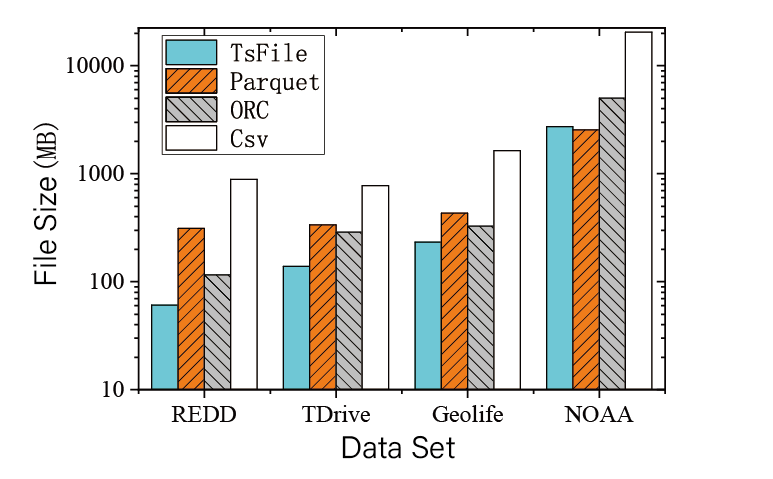
Additionally, Timecho TSDBs incorporate efficient compression algorithms to reduce storage costs while maintaining quick access to historical data. For instance, Chronos and Nova both offer delta encoding and time-based partitioning, which drastically reduces disk usage for high-frequency data streams.
Query and Analytics Capabilities
Time series analysis often requires complex queries, including aggregations, trend detection, and anomaly detection. Atlas shines in this area with its advanced query language and support for joining datasets over time. Chronos, while optimized for speed, also supports essential aggregations like min, max, average, and sum. Nova provides a balanced approach, offering both speed and analytics capabilities for general-purpose workloads.
For visualization, Timecho databases integrate seamlessly with tools such as Grafana and Kibana, enabling rich dashboards and real-time monitoring of metrics.
Security and Reliability
When dealing with time series data, reliability and security are paramount. Timecho databases include built-in authentication, role-based access controls, and encryption for data at rest and in transit. High-availability features, such as replication and automated failover, ensure continuous operations even in case of hardware failures.
These features make Timecho a strong choice for enterprises managing sensitive data streams, from industrial IoT networks to financial transactions.
Making the Right Choice
Choosing the right Timecho open source time series database requires a clear understanding of your workload:
- For applications requiring ultra-fast ingestion and minimal latency, Chronos is ideal.
- For projects emphasizing historical analytics and complex queries, Atlas is the optimal choice.
- For teams needing a versatile solution that balances speed, storage efficiency, and analytics, Nova offers the best combination.
Timecho’s ecosystem also allows easy migration between databases as your needs evolve, providing flexibility for growing organizations.
Conclusion
Time series data is at the heart of modern analytics and monitoring systems. Selecting the right open source time series database can make the difference between smooth, scalable operations and frustrating performance bottlenecks. This open source time series database comparison highlights Timecho’s offerings, helping you align your choice with your specific workload requirements. Whether your priority is real-time ingestion, complex historical analytics, or a balanced approach, Timecho provides a reliable, open source solution tailored to modern data needs.