
In machining, complexity is often mistaken for control. Some setups look highly customized, heavily adjusted, and full of small corrections, so they appear more precise. In practice, however, a more complicated setup does not always produce better results.
Many shops discover that the opposite is true. When the holding method becomes too dependent on constant adjustment, the process gets harder to repeat and more difficult to manage from one job to the next. A simpler and more stable setup often creates better long-term consistency.
That is why comparing workholding approaches is not only about strength or size. It is also about how easily the process can be repeated without unnecessary effort.
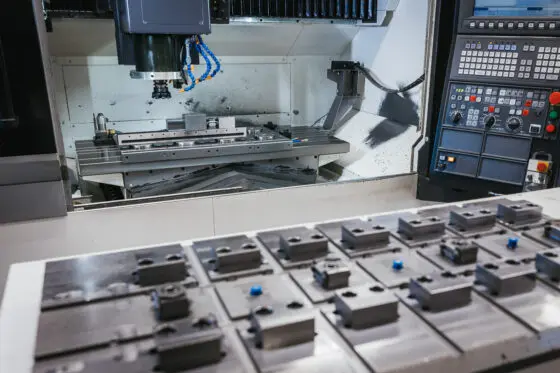
More Adjustments Do Not Always Mean Better Control
A complicated setup may allow a machinist to solve a short-term problem, but it often introduces extra variables into the process. More adjustment points usually mean more chances for inconsistency.
When operators have to keep rechecking alignment or making small changes during setup, the process becomes more dependent on individual habits. This makes results harder to standardize, especially across different shifts or repeated batches.
A cleaner setup logic reduces that burden. It helps the operator reach a stable result faster and with fewer moving parts in the workflow.
Turning Work Usually Benefits from Practical Simplicity
Turning operations often show this clearly. The part needs to be gripped securely, centered reliably, and loaded efficiently. If the holding method becomes overly complicated, it may slow down the job without improving the actual cutting result.
That is why many shops still prefer a dependable 3 jaw lathe chuck for regular turning work where stable holding and practical part loading are both essential.
A straightforward gripping method often performs better in everyday production because it is easier to trust and easier to repeat.
Milling Setups Need Balance More Than Complexity
In milling applications, the same principle often applies in a different way. The setup does not just need force. It needs predictable part location and balanced support.
That is one reason many manufacturers choose a self centering vise when they want more controlled positioning and a setup that behaves consistently across repeated jobs.
A balanced locating method often does more for process stability than a more complicated arrangement that requires repeated adjustment.
Simpler Setups Make Problems Easier to Diagnose
Another advantage of a simpler holding strategy is that it makes troubleshooting easier. When the setup is clear and repeatable, it becomes much easier to tell whether a machining problem comes from tooling, programming, material behavior, or machine condition.
With an overly complex setup, too many factors can hide the real issue. Operators may spend time correcting the wrong problem because the holding method itself introduces unnecessary uncertainty.
A simpler process creates clearer feedback, and clearer feedback makes improvement easier.
Repeatability Usually Matters More Than Customization
Custom setups can be useful, especially for unusual parts. But in daily production, repeatability usually matters more than complexity.
A method that can be recreated quickly and confidently often produces better long-term results than one that appears highly flexible but depends on constant manual correction. This is especially true in environments where multiple people may run the same job.
Consistency is often built through control, not complication.
The Best Setup Is the One That Stays Manageable
A strong machining process is not just one that works once. It is one that continues to work without creating extra burden on the operator.
That is why the best holding method is often the one that stays manageable over time. It gives the shop a stable routine, fewer surprises, and better process confidence without unnecessary setup drama.
In many cases, simpler workholding does not reduce performance at all. It improves it by removing the friction that complicated setups quietly create.
Conclusion
More complicated workholding is not always better workholding. In many real shop environments, the setup that performs best is the one that is easiest to repeat, easiest to trust, and easiest to control.
When machining efficiency and consistency matter, simplicity can become a real advantage. A cleaner setup often leads to smoother production, better repeatability, and fewer problems that operators have to solve by hand.