
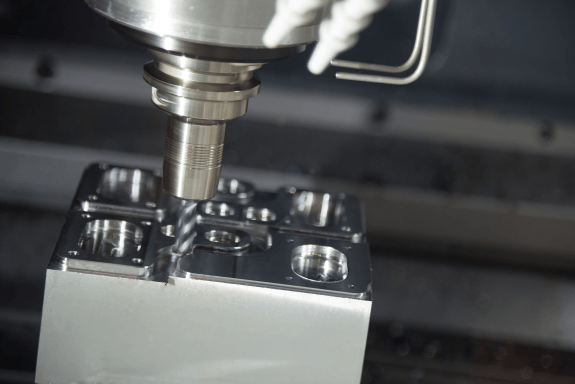
The medical industry moves at a pace where precision isn’t just a requirement—it’s a life-saving necessity. As healthcare shifts toward personalized medicine and specialized surgical tools, the manufacturing processes supporting it must be equally agile. At the heart of this evolution is low volume CNC machining, a production method that bridges the gap between initial prototyping and full-scale mass production.
By offering a high degree of accuracy without the massive overhead of traditional manufacturing, this process has become the backbone of modern medical device innovation.
Understanding Low Volume CNC Machining
In the context of medical devices, “low volume” typically refers to production runs ranging from a few dozen to several thousand units. Unlike injection molding, which requires expensive and time-consuming steel molds, CNC (Computer Numerical Control) machining is a subtractive process. It carves parts directly from a solid block of material—whether that’s surgical-grade stainless steel, titanium, or high-performance plastics like PEEK.
For medical device companies, this means they can move from a CAD design to a physical, functional part in a matter of days. This speed is essential in an industry where regulatory approvals and clinical trials can create lengthy timelines.
Why the Medical Sector Favors Low Volume Production
1. Accelerated Prototyping and Iteration
Medical devices often undergo rigorous testing. A surgeon might test a handle for a new laparoscopic tool and find that the ergonomics are slightly off. With low volume CNC machining, engineers can tweak the digital design and have a revised version ready for the next round of testing almost immediately. There is no need to retool a factory line; the machine simply follows the new code.
2. Material Versatility and Biocompatibility
Medical devices have strict material requirements. They must often be biocompatible, corrosion-resistant, and capable of withstanding repeated sterilization. CNC machining works seamlessly with:
- Titanium: Ideal for orthopedic implants due to its strength-to-weight ratio.
- Stainless Steel (316L): Common for surgical instruments.
- PEEK (Polyetheretherketone): A high-performance plastic used in spinal implants.
- Aluminum: Often used for diagnostic equipment housings.
3. High Precision for Complex Geometries
Modern surgery often involves robotic assistance or minimally invasive techniques that require incredibly small, intricate components. CNC machines can achieve tolerances as tight as +/- 0.005mm. This level of precision ensures that a cardiac valve or a bone screw fits perfectly every single time, reducing the risk of surgical complications.
Cost-Effectiveness in a Specialized Market
Many people assume that CNC machining is more expensive than molding, but for specialized medical devices, the opposite is often true.
The primary financial barrier in medical manufacturing is the “Tooling Cost.” Creating a mold for injection molding can cost tens of thousands of dollars. If you only need 500 units of a specialized orthopedic guide, the cost per part becomes astronomical when you factor in the mold. Low volume CNC machining eliminates this “sunk cost,” making it the more economical choice for niche products or orphan drugs/devices designed for rare conditions.
[Image comparing the cost curve of CNC machining versus injection molding over volume]
Navigating Regulatory Compliance and Quality Control
The FDA and other global regulatory bodies require strict documentation and “traceability” for every component in a medical device. Low volume production makes this easier to manage.
Because the batches are smaller, manufacturers can maintain tighter control over quality inspections. Every single part can be measured and verified against the original design. This high level of oversight is vital for ISO 13485 certification, the gold standard for medical device quality management systems.
Key Applications in Modern Healthcare
Custom Orthopedic Implants
Every human body is different. We are seeing a massive rise in “patient-specific” implants. Surgeons can now use CT scans to create a 3D model of a patient’s specific bone structure. Using low volume CNC machining, a manufacturer can produce a custom titanium plate or joint replacement tailored specifically to that individual’s anatomy.
Surgical Robotics
The arms and joints of surgical robots require high-strength, lightweight components that move with zero friction or “play.” CNC machining allows for the production of these specialized housings and gears that would be impossible to manufacture reliably through other methods at low volumes.
Diagnostic Equipment
From MRI components to handheld blood analyzers, the enclosures and internal structural parts of diagnostic machines are often produced in limited runs. CNC machining provides the durability and electromagnetic shielding (when using metals like aluminum) required for these sensitive electronics.
Bridging the Gap to Mass Production
Often, low volume CNC machining serves as a “Bridge to Production.” A company might use CNC to produce the first 2,000 units of a new product to enter the market and begin generating revenue while they wait months for high-volume injection molds to be fabricated.
This strategy reduces the “Time to Market,” allowing companies to establish a foothold and gather real-world user feedback before committing to the massive capital expenditure of a full-scale assembly line.
The Future: Hybrid Manufacturing
As we look forward, the line between 3D printing (additive) and CNC machining (subtractive) is blurring. Many medical manufacturers now use a hybrid approach: 3D printing the complex internal lattice structures for bone ingrowth and then using CNC machining to finish the high-precision mating surfaces and threads.
This combination ensures the implant is biologically effective while maintaining the mechanical precision that only CNC can provide.
Conclusion
The medical device landscape is moving away from a “one-size-fits-all” mentality. As we move toward more specialized, high-tech, and personalized healthcare solutions, the demand for flexible manufacturing grows.
Low volume CNC machining provides the perfect balance of speed, precision, and material integrity. It empowers engineers to innovate without the fear of high tooling costs and ensures that surgeons have access to the highest quality tools exactly when they need them. In the world of medical production, where the stakes are as high as they get, CNC machining remains an indispensable ally.